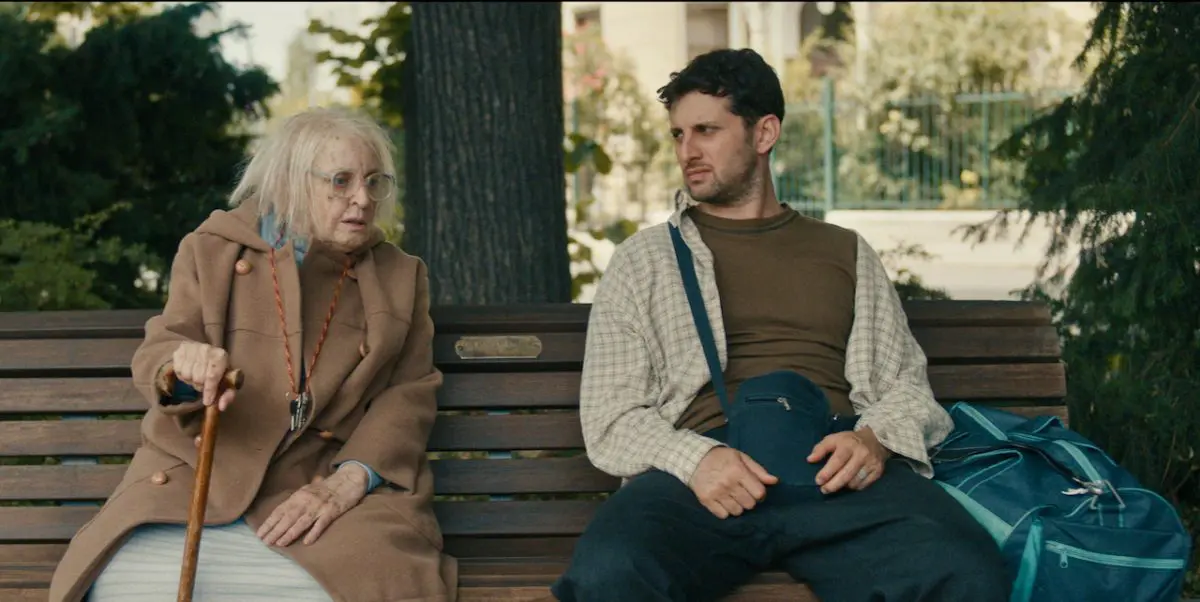
8 July 2026 — Somewhere between the third and fourth film in the German sections at Filmfest München, one need only read the titles to grasp the landscape of this cinema. Kalter Hund travels abroad as Let Sleeping Dogs Lie; Schöne Seelen becomes Beautiful Souls. The crime series Die falsche Tochter, about a talented young rider and the world of professional sport, with a buried secret at its center, answers, in English, to High Valley. And a domestic drama set entirely in a German town with a yoga teacher, her estranged pastor husband, a burglary is called, with a straight face, Eine Nacht in Bangkok. There is no Bangkok, nor a night there, only the borrowed glamour of a 1984 pop song written by two ex-members of ABBA, which we hear once, over the film’s closing minutes, pinned to the film like a customs sticker, in the hope that some of the cool will transfer. The filmmakers said themselves that it is about the chaotic mood of the Southeast-Asian capital. In the song, though, Bangkok is merely a neutral venue for a Cold-War chess match — nothing to do with heat or chaos at all. Did the filmmakers know that, or do they simply not care? Either way, the title doesn’t work. Yet it comes across as a paradox. The film reaches for a style it cannot produce from within, then passes the aspiration off as an identity of its own.
Filmfest München is Germany’s summer festival, and an audience once. It wears it difference from the Berlinale. There is no real market, and few true world premieres; much of the program is picked from other festivals such as Cannes, Venice, Rotterdam and Locarno. Two sections, however — Neues Deutsches Kino and Neues Deutsches Fernsehen, curated to secure FIAPF accreditation, carry the most festival’s world premieres. And the question of interest is: what is German cinema actually about?
The answer is … a corpse.
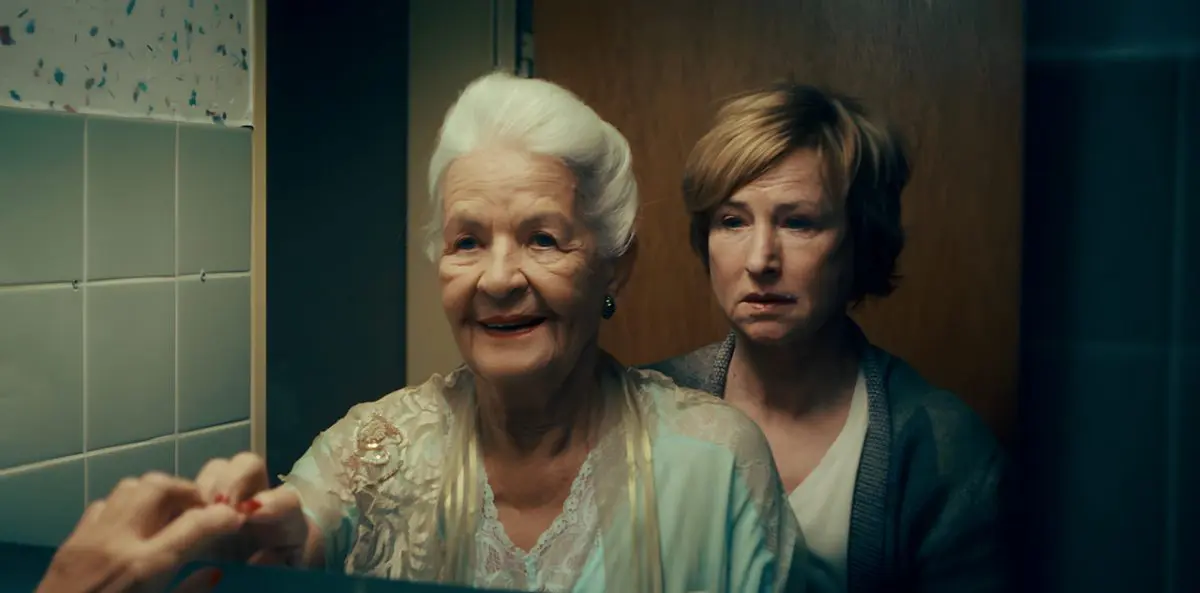
Let us count the openings. A grandfather found dead on the morning of his hundredth birthday (Kalter Hund); a father dead at fifty, his suicide disbelieved by his teenage twins (Chamäleon); a mother newly buried, and a daughter driving home to sort through what is left. German fiction, it seems, cannot begin a drama without a death to unlock it, or a crime to authorize it. Remove the corpse and one suspects the film would have no permission to feel anything at all. Somewhere along the way, German drama decided that an ordinary situation, two people in a room, an unbearable feeling, with no crime attached, was not sufficient grounds for a film. The French have never been embarrassed by a story, a man meets a woman, something happens between them, and that is the entire and sufficient event. On this slate there is scarcely a single story that dares to be merely human, without a sociological ticket stamped at the door. There are refugees and there are pastors; there is right-wing terror and there is a collapsing European Union; there is sex work and there is consciousness-transfer science fiction but the small, unmarked drama of people simply being people has no slot to be born into. Every story must first prove it is about something. And so, the films arrive pre-justified, each with its topic pinned on in advance, and each somehow less alive for it.
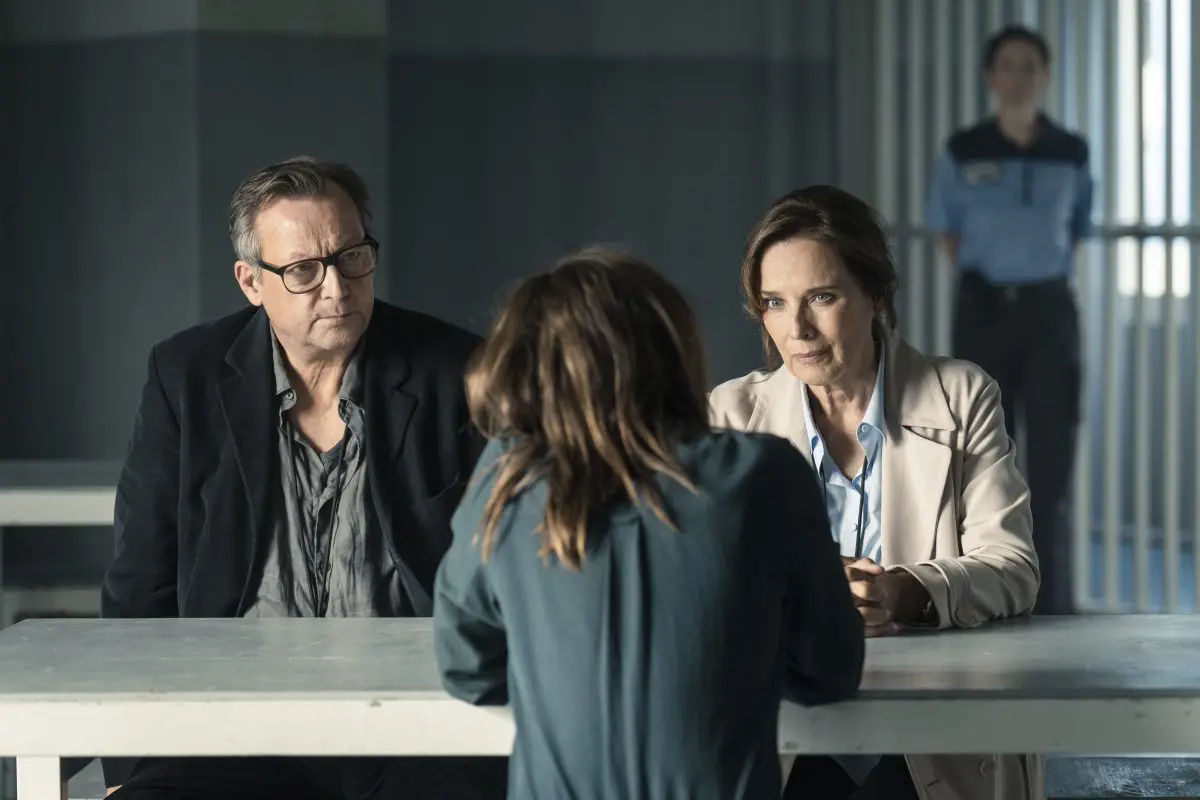
Eine Nacht in Bangkok serves as an example. Behind the borrowed title lies a crime drama that never risks leaving the path its own premise suggests. It has all the standard trappings, the estranged spouses, the suspect, the moral shading, yet lacks any real tension. It is competent the way a form is competent. It also belongs to a specific format, the made-for-television film, which operates by its own rules. A fixed running time, a slot to fill, a broad evening audience to reassure. Yet none of this changes the fact that the subject matter, the methods of exploring it, and the well-worn formulas remain unchanged.
Perhaps the most interesting entry in this lineup is the series Die falsche Tochter, though it, too, follows a familiar formula. It marks the screen debut of the renowned German author Juli Zeh, who co-wrote the screenplay. The premise hints at a mystery, most likely a crime, though it is hard to say for certain after only two episodes at the festival. From the start there are covert attempts to maim or kill a talented equestrian; the criminal element is present, as is the “false” note the title promises. No actual corpse appears in the first two episodes, but the viewer is confronted with a “half-corpse”, a mysterious, seemingly deranged woman held in confinement. The difference from Bangkok is palpable, likely due to the author’s unique approach.
Juli Zeh is a popular novelist and an honorary judge of the Constitutional Court. She builds the plot around a subject she loves, equestrian sports, which she knows as a rider herself. She draws the professional show-jumping world as a closed community poisoned by intrigue. The setting is rendered in enough detail that the crime, when it comes, lands on real people. Mercifully, we are not dealing with politics, history, ethnic conflict or sexual identity here, or at least not to that extend. There is the foreman Enis and his son Kasim, outsiders who find that life in Germany never quite lets them belong, no matter how close the son grows to Marco, the heir to the estate. This, incidentally, is an outdated picture of Germany. These days Germans themselves are leaving in search of a better life elsewhere, yet the old German school still assumes the whole world is waiting to move to Germany. Juli Zeh makes the crime land on people she has taken the trouble to build, whereas Bangkok only fills the slot where a story should be.

By that measure the slate sorts itself quickly. Im Spiegel meiner Mutter, the final panel of Jutta Brückner’s decades-long mother-daughter trilogy, is the serious, capable, festival-approved version of the death drama where Corinna Harfouch plays an archaeologist coming apart while a bog body waits in the basement, the whole thing driving toward a closing image of self-immolation-by-metaphor: burn the photograph, destroy the self, begin again. It is well made and it is unrelievedly bleak. It belongs to a wider reflex on this slate by which “serious” and “unpleasant” have quietly become synonyms, as though the surest proof of depth were how bad you feel leaving the cinema. Lieblingsmenschen, which won the audience prize, is the opposite evasion. It is the feel-good assembly of the season’s approved topics (refuge, queerness, great age) into something warm, funny and entirely frictionless. There is a reflection on the past, too, Nazi Germany, and how people’s lives were destroyed. The film suggests the same happening today to an Iranian on the verge of being sacrificed in his own country, as millions of Germans were during the Second World War. The film likely did not intend this ending. It wanted to stay warm and supportive. And Für immer 16, Brezel Göring of Stereo Total filming his late partner’s unfinished novel on Super-8, is what happens when a musician makes a film. Ninety minutes that feels like an extended music video. The shapelessness may be the point, a portrait of a generation with no plan and no orientation, trying things out because trying things out is all there is. But intending formlessness and surviving it are different achievements, and by the end one has nothing to hold.
One aspect of the German cinema sections deserves special mention. The program’s central, unifying theme is women, specifically women directing across the featured films, whose stories focus on mothers, daughters, and the bonds of continuity between them. The most unconventional of these projects, Erzähl mir dein Morgen (Tell Me About Your Tomorrow), won debut awards for both directing and acting; it was created by a team aptly named Freundinnen Film (Girlfriends Film), whose members took turns handling screenwriting, editing, and cinematography duties. It is an intimate, personal, self-funded film, and it is noteworthy that the jury singled it out, given how rarely such pictures emerge within the established system. This brings to the mechanism hidden inside the mechanism.
Look closely at the fine print in the credits of almost any “independent” German film, you find the same names under “production”: ZDF, ARTE, WDR, BR, the regional public broadcasters and their editorial departments. These are institutions bound by a mandate, legally obliged to reflect the life of their society and region, and the diversity of viewpoints within it. Perhaps it is precisely this obligation to mirror the social landscape that clashes with the purely human stories German film and television might otherwise tell. After all, a plot centered on “a man, a woman and their relationship” fulfils no public mission. A system working exactly as designed prioritizes the theme over the individual. And that may well explain why there is simply no room for an ordinary drama to emerge.
Kino & Kunst
Cinema, art, and culture, since 2012.