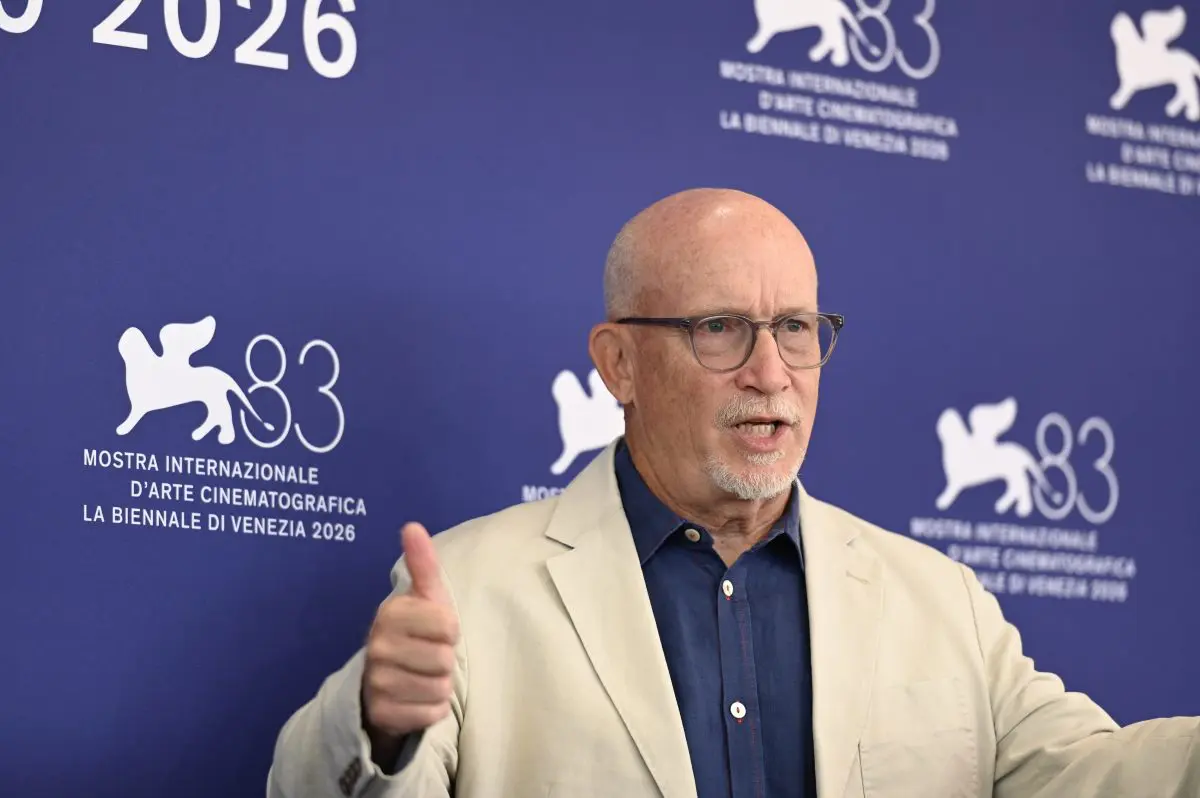
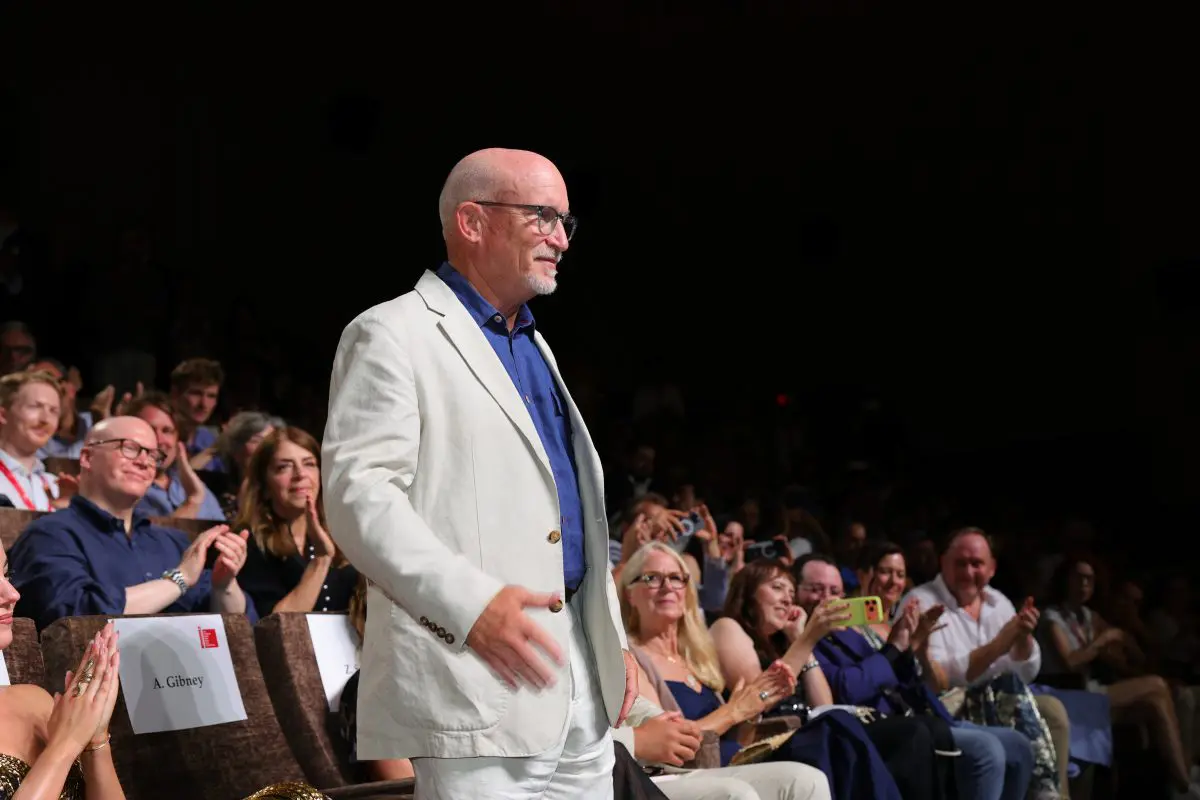
23 September 2026 — No one elected Elon Musk. He appointed himself, becoming the richest person on Earth with the help of government money, and emerging as a threat to the world he once seemed to want to transform. The Oscar-winning American documentary filmmaker Alex Gibney spent four hours presenting his findings on how this man amassed such power. The film was one of the most intriguing premieres at the 83rd Venice Film Festival. Musk himself declined to participate, so the director took a different approach. He used the very technology Musk worships to ensure his presence in the film, since modern capabilities allow one to replace a living man or resurrect a dead one. An avatar recites statements Musk has made in public.
Gibney, whose previous work includes films on the Enron scandal, Lance Armstrong, Scientology and Elizabeth Holmes, explained to journalists in Venice why he undertook this project. He wanted to understand how the richest man in the world became who he is, and what it means for the rest of us that he is now one of its leaders. He called Musk extremely dangerous to society and to global democracy. He also said that almost everyone he approached was afraid to speak, not only critics but colleagues and friends, and that most of them refused.
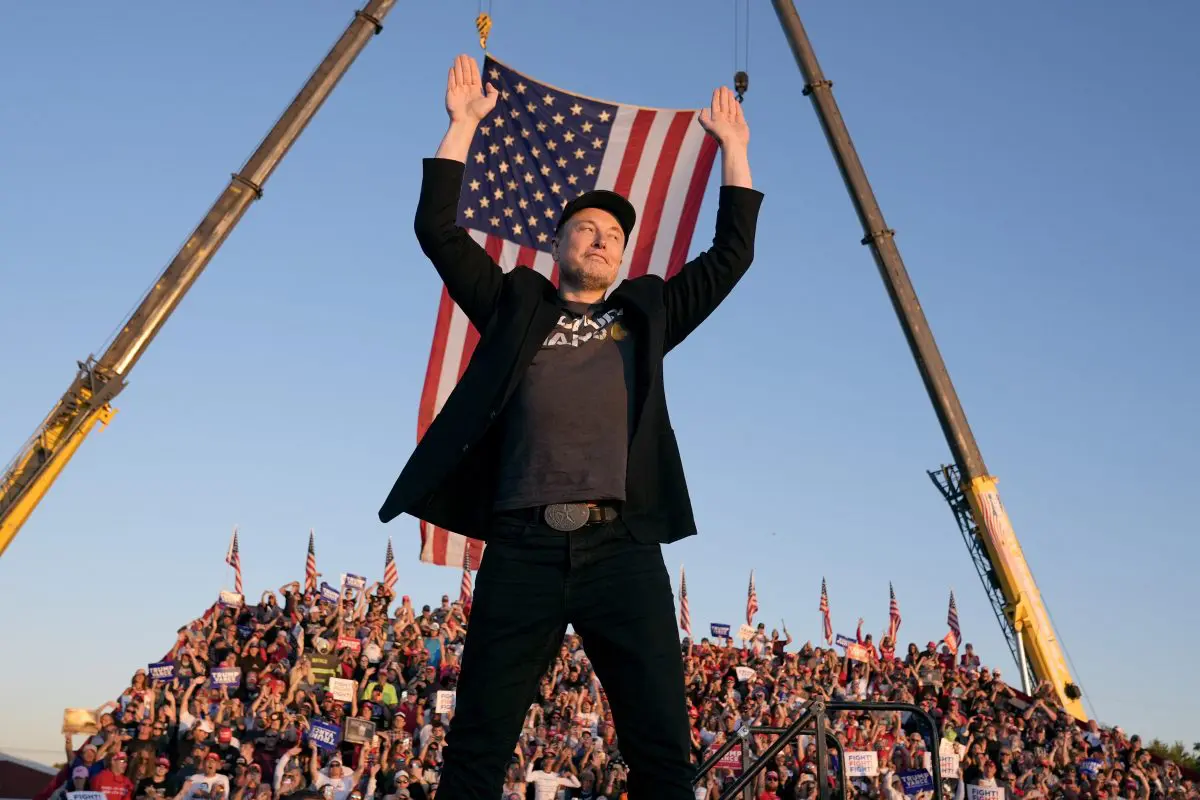
The irony is that a man who began by describing himself as an engineer built his fortune on public money. Tesla received a $465 million loan from the Department of Energy in 2010, under Barack Obama, and SpaceX was kept alive by NASA contracts. He then spent roughly $290 million of that fortune electing Donald Trump in 2024, and was rewarded with DOGE, the Department of Government Efficiency, which he ran for four months in 2025. He cancelled contracts, ended programs. The trillions he promised to save never appeared, but his young staff were given administrative access to federal databases holding the records of hundreds of millions of people. Trump got rid of him.
But it all began much earlier and the film takes us to South Africa, where Elon spent his childhood, where his father verbally abused his wife daily, calling her stupid and ugly, and beat her whenever she disagreed with him. The film also examines Musk’s first marriage to Justine. In 2010 she described their union in similar terms, recounting the humiliations she endured. Gibney draws no explicit conclusion, but it is evident to the observer that a man who needs to suppress and humiliate another person every single day can only be deeply unbalanced and insecure. The documentary examines Musk’s projects by showing the conditions under which they were created and what was kept from the public. Starting with Tesla, when Musk ousted the company’s true founder, Martin Eberhard, and retroactively claimed the title of co-founder for himself. The Autopilot saga serves as a prime example of the deception involved, illustrating how Tesla’s new owner built his fortune on lies. Musk marketed a driver-assistance system as a fully autonomous Autopilot. Yet, the system frequently malfunctioned, leading to accidents in which people were killed or injured. It turned out these incidents were no accident. The system’s unreliability had been confirmed during testing and one engineer recounts watching a test vehicle crash into a barrier proving that the problems existed from the testing phase. Nevertheless, the system was sold as “Autopilot” despite failing to function as advertised.
Moreover, there is reason to think that the technology was developed not for driver convenience, but to gather information on people. Every car is equipped with eight cameras that record continuously and feed data into system-training models. Millions of vehicles roam the streets, observing the world around them. There is no proof that surveillance was the specific goal, but the fact that the tool exists and is in their possession is undeniable. A similar pattern emerges in the realm of artificial intelligence. Musk co-founded OpenAI in 2015, left its board in 2018, founded xAI in 2023, and integrated the Grok chatbot into the X platform. For a full decade, he warned that this technology would destroy humanity, only to create his own version of it. Grok learns from posts on the platform Musk purchased and is fine-tuned by the owner himself, meaning its political stance is baked into the system from the start.
In 2001, when Elon Musk was thirty and had exited the PayPal venture with more money than he needed, he turned his thoughts to space. By then, NASA’s budget was shrinking, and there were no plans for future missions, such as sending humans to Mars. Musk concluded that the problem lay not in funding or engineering challenges but in a lack of public attention, and he decided that a spectacular publicity stunt would be the solution. He wanted to buy a rocket, mount a small greenhouse on it, land it on Mars, grow a plant in Martian soil under a dome, and send a photo back to Earth showing something green against the backdrop of the Red Planet. He named this project “Mars Oasis.” Musk hoped it would spark public interest in space, believing that Congress would follow the shift in public opinion. He was prepared to spend twenty or thirty million dollars of his own money on what was, in essence, an advertisement for spaceflight.
However, launching an American rocket proved far more expensive than he had anticipated, so he turned to Russia where the collapse of the USSR had left a vast stockpile of intercontinental ballistic missiles that were being converted into satellite launch vehicles and sold at low prices. He flew to Moscow in October 2001 and made two subsequent trips, but to no avail; he was unable to purchase any missiles. Consequently, he decided to build them himself. In 2002, he founded SpaceX using about $100 million of his own money, hired Tom Mueller, who had previously built engines in his own garage and set up production in a warehouse in El Segundo. The first rocket, the Falcon 1, failed three times in a row, nearly bankrupting the entire venture; finally, in September 2008, the fourth rocket successfully reached orbit, and in December, the company secured a contract from NASA.
Yet, it took years of further failed attempts before, in December 2015, one of the rockets finally achieved a vertical landing. It all started with Mars, but the flight was too expensive—whereas a rocket company was a cheaper option. However, the rockets he built deliver satellites and cargo to orbit and go no further, even though the business model is highly successful. Yet not a single one of his spacecraft has actually reached Mars. So how can a man can accomplish missions to Mars when he cannot even get his cars to drive properly here on Earth? But probably people lacking empathy and life values do not ask themselves such questions.
The film constantly shifts back and forth between the public and the private. Musk is not cut out to be a family man, a father, or a partner; rather, he is someone whose needs are catered to by others. The same applies to the many women in his life and his children some of whom Gibney interviews for the film. The film counts at least fourteen children by four different women, some conceived via IVF involving employees or business associates. The mothers live in Musk-owned homes, clustered together in a Texas neighborhood. Musk frames this as a response to the threat of civilizational collapse caused by declining birth rates. Yet the world is overpopulated, and the global population continues to grow, approaching 10 billion. Musk views his own procreation as a countermeasure to the Western world’s shrinking birth rate. It is unclear why this must take the form of propagating his own genome, or why his genes should be considered superior. It looks more like the creation of a dynasty and a deep-seated belief in his own superiority. An underlying eugenic logic links this to his plans for colonizing Mars. Both are projects for a future built around his own persona.
The film poses a central question: “Why is he allowed to win?” Answers can only be speculative. Perhaps it is because the traits that make him dangerous are perceived as leadership qualities like confidence, a propensity for risk-taking, and indifference to the opinions of others. Money offers a distinct advantage, but one need not participate in social structures or wait to be elected. One can simply elect oneself.
Kino & Kunst
Cinema, art, and culture, since 2012.