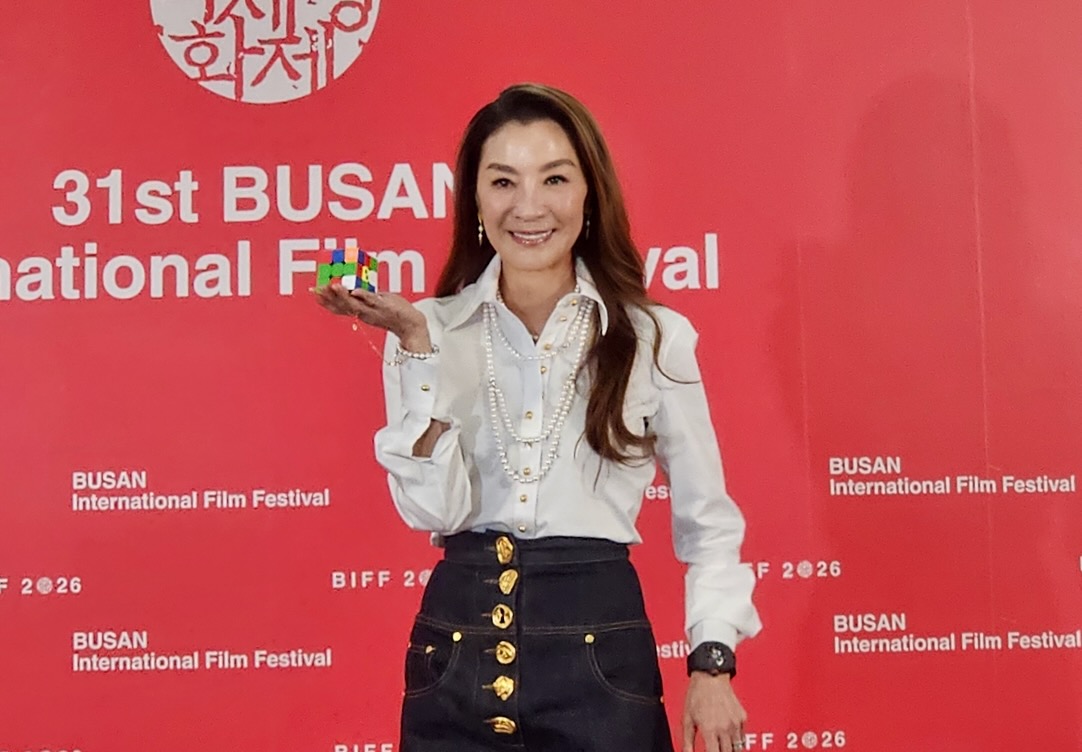
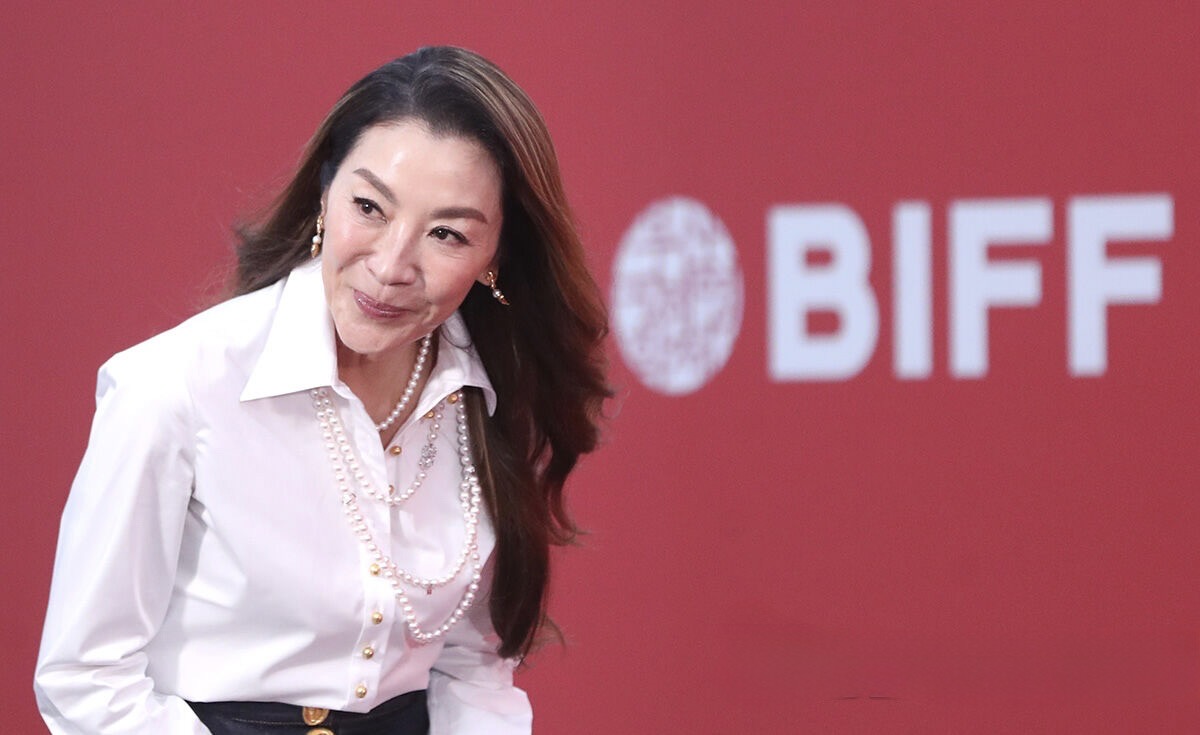
When Michelle Yeoh landed in Busan a few days before the festival, a double rainbow hung over the city. She mentioned it up at her press conference, as if someone had arranged it for her. It would fit her year. In February she received a star on the Hollywood Walk of Fame, and that same month, at the Berlinale, she became the first Asian woman to be given the Honorary Golden Bear. Now Busan, where she last walked the red carpet in 2011 with “The Lady”, has named her Asian Filmmaker of the Year, an award that went to Jafar Panahi last year and, before him, to Kiyoshi Kurosawa, Chow Yun-fat and Tony Leung.
In her speech at the opening ceremony, she said the festival she remembered as a meeting place for Asian filmmakers had grown into a global one that gives Asian cinema a real voice. A film begins as an idea, she told the audience, but it becomes real only when someone sits in the dark and gives it their time and imagination. She also spoke warmly of Ann Hui, who received the festival’s Camellia Award the same evening and who directed Yeoh thirty years ago in “The Stunt Woman”.
The next morning, at the press conference for her new film “It’s My Time”, she recalled the shock of arriving in Hollywood and being told she was a minority, and how even after “Tomorrow Never Dies” the scripts kept placing Asian women in a Chinese restaurant or a laundromat. Accepting those roles, she believed then, only keeps the image alive. Asked about failure, she compared it to a heartbeat. “It goes up, it comes down”.
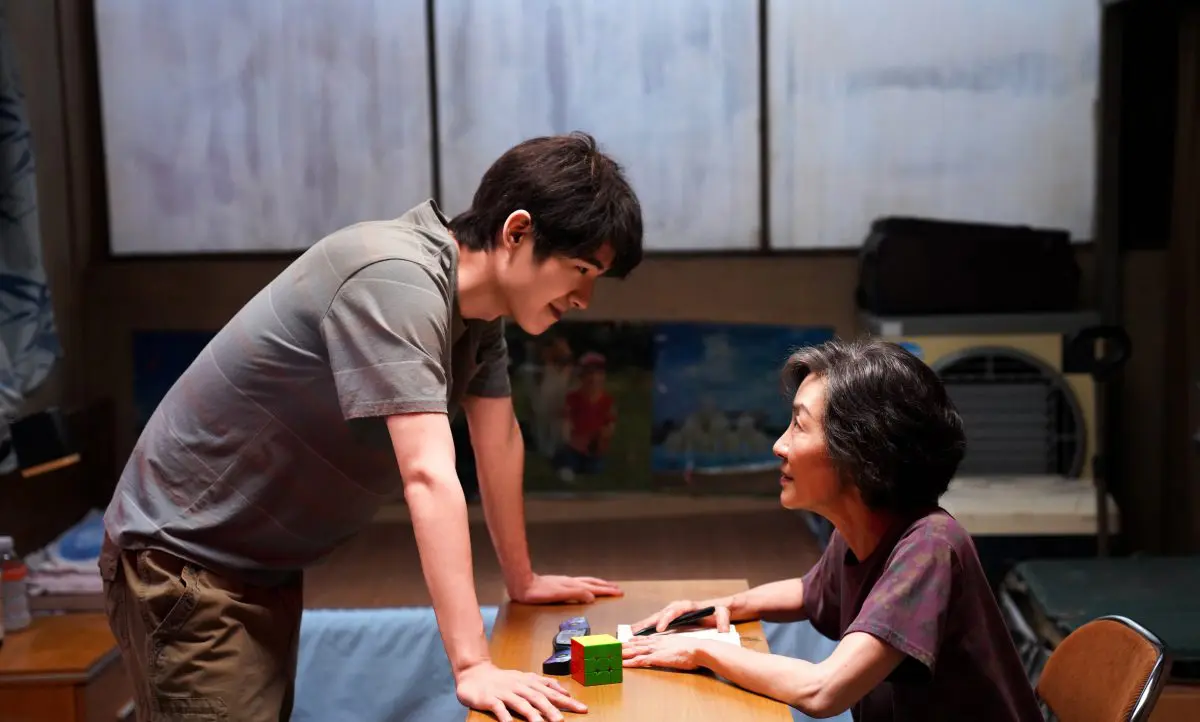
“It’s My Time” is her first Chinese-language feature since “Master Z: Ip Man Legacy” in 2018, and her first since the Oscar. Yeoh plays Zhao Yanhong, a stubborn woman in her seventies whose son moves her in a nursing home. A former Rubik’s Cube prodigy, now broke, homeless and drinking too much, is hired to teach the residents the cube as a hedge against dementia. He sleeps through his own class until Zhao wakes him by solving the puzzle under his nose, and soon she has hired him as her personal coach for the national competition. The story is true. It is based on Zhao Wenying, a retired maths teacher from Zhejiang who picked up the cube in 2014 after a grandchild showed it to her, and who became the fastest solver over 60 to do it blindfolded.
From the first scene, it is clear that the film exists to entertain. Anyone who remembers Bai Xue’s debut, “The Crossing”, a small, restrained drama about a schoolgirl smuggling phones across the Hong Kong border, and comes looking for the same formal curiosity will leave empty-handed. This is a comedy-drama assembled from familiar parts, the training montage, the setback, the old family wound, the climactic competition, and it hits each mark on schedule. The story floats in an unnamed city, unmoored from any particular time and from almost any social world. What results in the flatness peculiar to cross-pleasers, which rarely manage to hold something delicate and something broad in the same hand. Yeoh plays Zhao almost as a superwoman, with a vigor no ordinary seventy-year-old could summon. But exaggeration has always been part of popular Asian cinema, from Hong Kong comedy to the Korean dark comedies in which actors push everything a notch past life, and Yeoh is working squarely in that tradition. The most curious choice is the casting itself. At 64, she plays a woman of seventy, and she said she studied how older women walk and move in markets to get the body right. Actresses usually travel in the opposite direction.
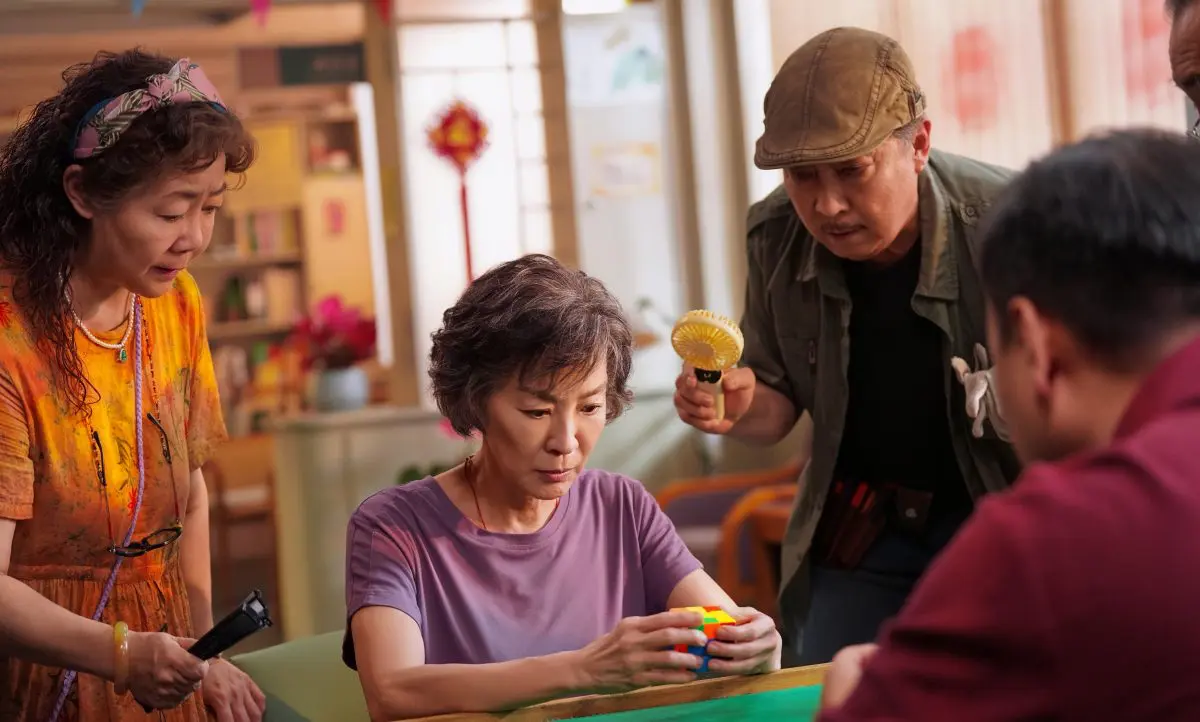
Then again, cinema has always lived and fed on fantasy and inspiration, on visions of life that most of viewers never meet in their ordinary days. That is why we go to movies, young and old. Older audiences, though, rarely see themselves at the center of a film, and older women even less often. Here is a seventy-year who is difficult, funny and fiercely competitive, and who ends up rescuing the young coach who had given up on everything, rather than the other way around. A woman of that age carrying a mainstream film is probably rarer in Chinese cinema than it should be, and the real story of a retired teacher who found a new passion deserved telling. “No matter of what age, there’s always the possibility of new opportunities”, Yeoh said at the press conference. Some viewers will leave the theater taking her at her word. Others may bristle at the film’s improbable stamina and its ready sentiment. Both responses seem fair. “It’s My Time” entertains, and it does not pretend to say anything new about cinema. For a film of this kind, that is enough.
In Busan the film sits in a small tribute alongside three titles Yeoh chose herself, Reign of Assassins, Everything Everywhere All at Once and Sandiwara, an eleven-minute short Sean Baker shot on an iPhone in a Penang night market, with Yeoh playing five different characters.
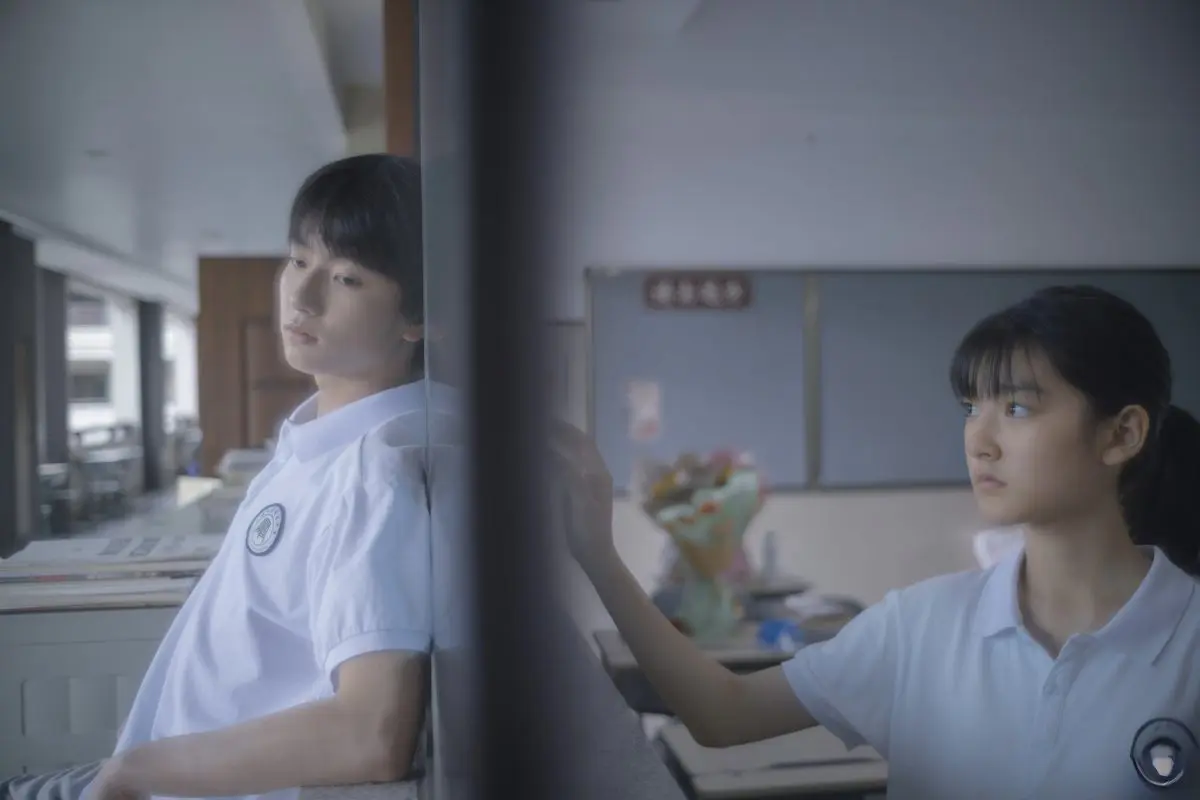
The festival around her is having a consequential year. This is the first edition since FIAPF, the international federation of film producers, counted Busan among its A-list festivals, and the first in which the winners of its Asian competition can be submitted to the Oscars. In only its second year, the competition is a more adventurous proposition than the gala slate. Japan supplies Shuichi Okita’s “Satoko Always”, a triptych about women named Satoko who each find their way to writing; Nanako Hirose’s “Between Two Lovers”, a drama from a former protégée of Hirokazu Kore-eda; and Takuya Kato’s “The Day After Sunday”, bult around Haru Kuroki. In “The First Taste of Loneliness”, with Zhou Xun is one of three generations of Chinese women working through grief, and Lee Yun Chan’s “To Be Ordinary” follows a Taiwanese family after an accident leaves a young man paralyzed. From Indonesia come “Ibuku” (“My Mother”), in which Christine Hakim plays a widow trying to reach her daughter on death row abroad, and Yosep Anggi Noen’s political drama “The Sea Speaks His Name”. Majid Majidi, the Iranian director of “Children of Heaven”, brings “Midday Meal” on his first visit to Busan. It is a reminder of how wide a map of Asia the festival draws.
Korea, unusually for tis home festival, fields only a few titles, and not the expected ones. Youm Kyu-bock’s “Long Long Night” is an animated feature, a rare sight in a main competition, Kim Jung-hoon’s “Shaving” is a horror film. “Beach Fictions” is one of three first features in the lineup, along with Japan’s “Silver Express” and the Uzbek “Hilol”. Taken together, the selection does what the festival’s director, Jung Han-seok, said it was meant to do, which is to capture the face of Asia as it is now. The winners will be announced on October 15.
Kino & Kunst
Cinema, art, and culture, since 2012.